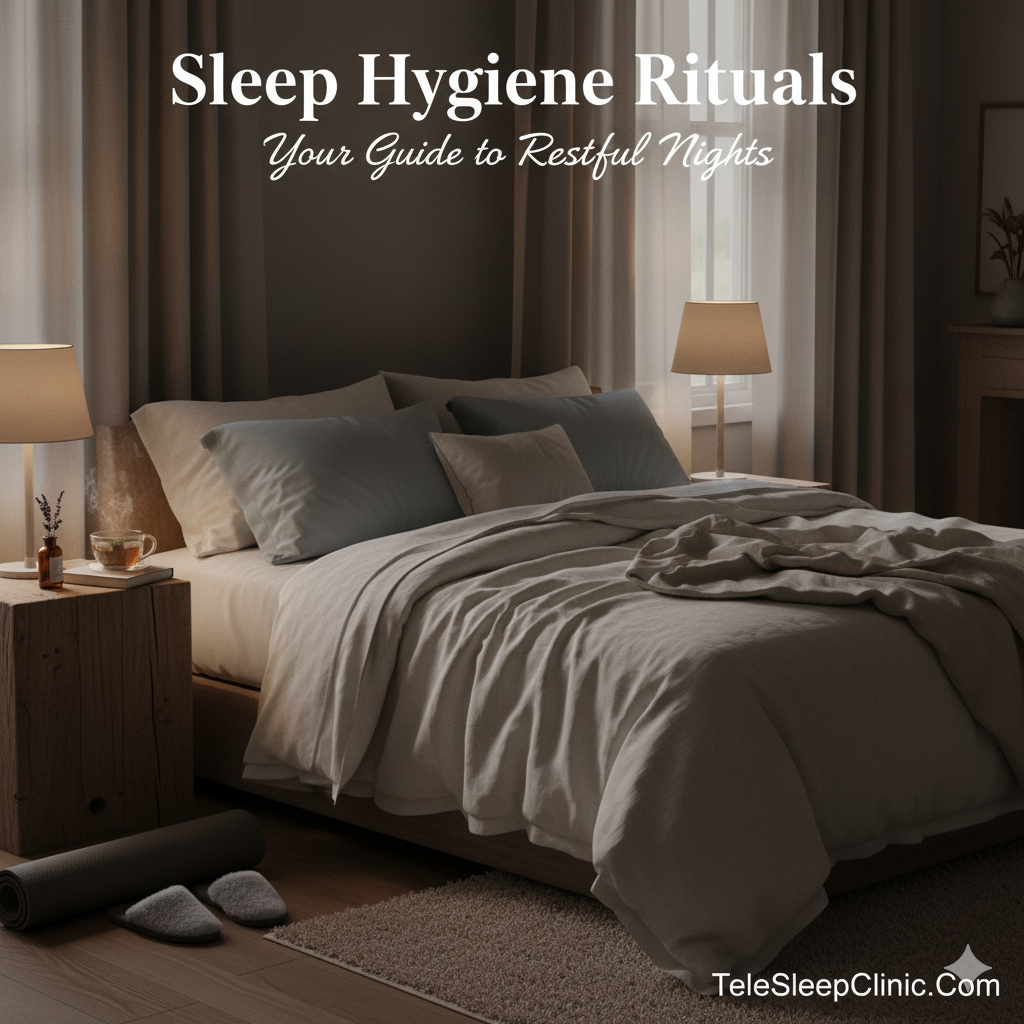
Mastering Sleep Hygiene: Simple Habits for Life-Changing Rest
Welcome to TeleSleepClinic.com – Your Partner in Better Sleep from Anywhere.
Dr. Arveity Setty, MD, FAASM, FAAP, DABOM
“WHY CAN’T I SLEEP?” tops the list of late-night Google searches, quality rest feels like a distant dream for far too many. At TeleSleepClinic.com, we see this every day in our virtual consultations: busy professionals, parents, and students struggling with insomnia, only to discover that foundational sleep hygiene practices can turn things around without ever leaving home. As a leading telehealth sleep clinic, we’re dedicated to making evidence-based sleep solutions accessible via convenient online visits with board-certified sleep specialist – starting with empowering you through proven sleep hygiene tips.
Sleep hygiene isn’t just buzz – it’s a set of daily habits proven to help you fall asleep faster, stay asleep longer, and wake up refreshed. The American Academy of Sleep Medicine (AASM) positions these practices as the cornerstone of cognitive behavioral therapy for insomnia (CBT-I), their recommended first-line treatment. Whether you’re dealing with occasional toss-and-turn nights or chronic issues, starting here can make a real difference.
The AASM and Sleep Research Society recommend adults aim for at least 7 hours of sleep nightly (ideally 7-9), linking consistent shortfalls to risks like impaired immunity, heart disease, and cognitive fog. Let’s explore expert-backed tips, real success stories, and how telehealth fits in perfectly.
1. Stick to a Consistent Sleep Schedule
Go to bed and wake up at the same time every day – yes, even on weekends. This aligns your body’s internal clock (circadian rhythm), making it easier to fall asleep and wake up refreshed. Wake up time is the most important component of sleep hygiene and must wake up at the same time irrespective of bedtime(of course which should only happen on occasions)
Why it works: Irregular schedules disrupt your hormones, like melatonin. A study highlighted by the AASM found that college students who regularized their sleep-wake times reported less daytime sleepiness and better overall sleep.
Real-life win: In one intervention with young adults who had irregular schedules and excessive tiredness, participants who stuck to a fixed bedtime and rise time for just four weeks saw their sleep efficiency improve and daytime fatigue drop significantly (as noted in reviews of sleep hygiene efficacy).
2. Create a Sleep-Friendly Bedroom
Keep it cool (60-67°F or about 15-19°C), dark, and quiet. Use blackout curtains, earplugs, or a white noise machine if needed.
Evidence: The AASM’s “How to Sleep Better” guide stresses a dark, quiet environment to promote deeper sleep. Light exposure at night suppresses melatonin, while noise fragments rest – even if you don’t fully wake up.
Quick tip: Remove clocks from view to avoid “clock-watching” anxiety.
3. Build a Relaxing Pre-Bed Routine
Wind down with calming activities: reading a book, gentle stretching, or a warm bath. Avoid screens at least an hour before bed – blue light tricks your brain into thinking it’s daytime.
Backed by science: The Sleep Foundation and CDC both recommend this, citing studies showing reduced pre-sleep arousal leads to faster sleep onset.
4. Watch What (and When) You Eat and Drink
No heavy meals, caffeine, or alcohol close to bedtime. Caffeine can linger in your system for 8+ hours, and while alcohol might make you drowsy initially, it fragments later sleep stages. Its a best practice to avoid alcohol. But if you have to consume then plan at least 4 hrs before bedtime and do not use alcohol to help sleep, especially so if you are struggling with insomnia.
The AASM warns against evening stimulants, and research in Sleep Medicine Reviews confirms avoiding caffeine after noon improves sleep quality for most people.
5. Get Daylight and Exercise During the Day
Exposure to natural light in the morning helps regulate your clock, and regular physical activity (but not too intense right before bed) promotes deeper sleep.
AASM position: Exercise is a cornerstone of healthy sleep habits, with studies showing moderate daytime activity boosts sleep duration and quality.
6. Limit Naps (or Make Them Strategic)
Naps are not recommended in general but a short power naps (10-20 minutes) can refresh especially in people who are needing alertness, mood and cognitive performances, but long or late-day naps interfere with nighttime sleep and might have significant adverse effects.
CDC tip: If you nap, do it early and keep it brief.
Real Stories: When Sleep Hygiene Actually Changed Lives
- College students turn things around: In a group program where teens learned sleep hygiene over four sessions (including tracking habits and making personal plans), participants added nearly 30 minutes of sleep per night and felt less sleepy during the day – effects that lasted six months (from a study on adolescent sleep interventions).
- Busy professionals reclaim their energy: One workplace study shared by the AASM involved simple education on hygiene rules (consistent schedules, no late caffeine). Workers not only slept longer but reported sharper focus and fewer mistakes – proving small changes add up in real-world chaos.
- Hospital patients recover faster: In hospital settings, basic hygiene tweaks like dimming lights and reducing nighttime noise improved sleep quality for most patients, speeding healing (per nursing intervention reviews).
These aren’t rare wins – reviews of dozens of studies show sleep hygiene education consistently helps non-clinical folks (like stressed parents or shift workers) sleep better when tailored and consistent.
Ready to Transform Your Sleep? Book Your TeleSleepClinic Consultation Today
You’ve just armed yourself with science-backed sleep hygiene strategies that form the core of what we teach at TeleSleepClinic.com – and they’ve helped countless patients reclaim their nights, from adding precious minutes of deep sleep to boosting daytime energy and focus. Consistency is key, but if self-help isn’t cutting it, you’re not alone.
At TeleSleepClinic.com, our virtual sleep experts build on these sleep hygiene foundations to personalize your plan through secure online assessments, incorporate CBT-I techniques, or screen for underlying issues like sleep apnea – all from the comfort of your home. No travel, no waiting rooms; just real results tailored to you.
Take the first step tonight: Visit TeleSleepClinic.com to schedule your affordable telehealth appointment. 10% off for consultations with code 10OFF until December 31 2025. Better sleep hygiene leads to better sleep – and it starts here! 😴
(Sources: American Academy of Sleep Medicine healthy sleep habits guidelines; Sleep Foundation reviews; CDC sleep recommendations; peer-reviewed studies on sleep hygiene interventions.)