Can Sleep Trackers and Smartwatches Make Insomnia Worse?
What a Sleep Specialist Wants You to Know
Arveity Setty, MD, FAASM, FAAP, DABOM
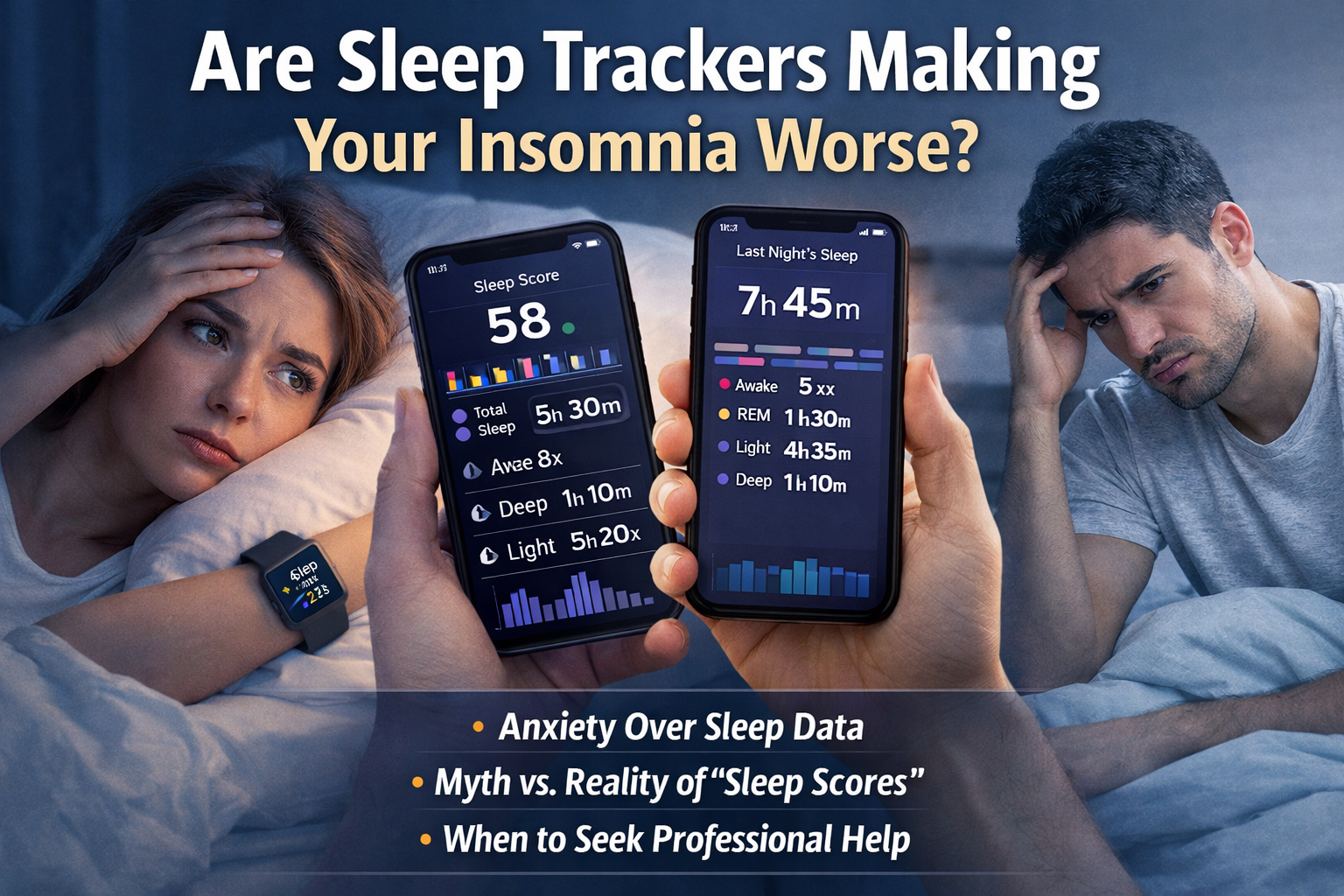
Sleep trackers, smartwatches, and sleep apps have become nearly universal. In my clinical practice, more than half of patients wear a sleep-tracking device, and about one in four actively discuss their sleep data during visits. Many arrive with screenshots showing total sleep time, REM sleep, deep sleep, light sleep, and the number of times they “woke up” overnight.
For some people, these devices feel reassuring. But for many patients with insomnia, sleep trackers may actually make sleep worse.
This article explains why — and how to use sleep technology more safely and effectively.
The Rise of Sleep Tracking — and Sleep Anxiety
Patients often tell me:
- “My watch is very accurate — it picked up every time I woke up.”
- “It says I barely slept at all.”
- “My sleep score was terrible, so I knew today would be rough.”
Most of these patients are not indifferent to the data. Many are worried, frustrated, or preoccupied with their sleep numbers. Some become deeply focused on nightly metrics, while others follow watch-generated advice without questioning it — even when it worsens their insomnia.
This pattern has a name in sleep medicine.
What Is Orthosomnia?
Orthosomnia is a term used to describe an unhealthy obsession with achieving “perfect sleep,” often driven by sleep tracker data. The concept was first described in the sleep-medicine literature to explain how the pursuit of ideal sleep metrics can paradoxically worsen insomnia.
Insomnia is not simply a lack of sleep — it is a condition of hyperarousal, where the brain remains overly alert. When patients constantly monitor sleep data, it can:
- Increase anxiety about sleep
- Shift attention toward normal awakenings
- Reinforce the idea that sleep must be “controlled”
Ironically, trying harder to sleep often makes sleep worse.
Inadequate sleep hygiene is still the most common reason for poor sleep and excessive sleepiness.
Why Sleep Trackers Feel Accurate — Even When They’re Limited
Many patients tell me there is “no mismatch” between how they feel and what their watch reports. The data feels correlatable — and that’s understandable.
Most consumer sleep trackers estimate sleep using:
- Movement (actigraphy)
- Heart rate
- Heart rate variability
These tools are reasonably good at estimating sleep duration over time, but they cannot accurately determine sleep stages or distinguish quiet wakefulness from sleep in people with insomnia.
In sleep medicine, the gold standard for sleep measurement is polysomnography, which uses EEG (brain waves), eye movements, muscle tone, breathing, and oxygen levels. Consumer devices do not measure brain activity.
This means:
- Quiet wakefulness is often misclassified as sleep
- Brief awakenings are overestimated
- Sleep stages (especially deep and REM sleep) are approximations, not direct measurements
Common Sleep Tracker Myths I See in Clinic
These are the most frequent misconceptions I help patients unlearn:
1. “My watch says I woke up many times”
Short awakenings are normal and occur in everyone. Most people simply don’t remember them unless they’re paying close attention — or checking a device.
2. “REM percentage means good-quality sleep”
There is no single ideal percentage of REM sleep. Night-to-night variation is normal, and REM percentage does not define sleep quality.
3. “My sleep score predicts how my day will go”
How you function during the day depends on many factors — mood, stress, expectations, and resilience. Sleep scores can create a self-fulfilling prophecy, where people feel worse because they expect to.
How Sleep Trackers Can Worsen Insomnia
In my practice, I see several common patterns:
Following the Watch Instead of the Body
Some devices suggest going to bed earlier after a “poor sleep night.” But going to bed when you’re not sleepy increases time awake in bed — a known driver of insomnia.
Increased Sleep Effort
Patients may stay in bed longer, try to “force” sleep, or focus excessively on numbers instead of sleepiness.
Unnecessary Supplements or Medications
Some patients start melatonin or over-the-counter sleep aids purely based on tracker feedback, not symptoms.
Interference With Treatment
In some cases, patients follow their watch more closely than evidence-based insomnia treatment recommendations.
Are Sleep Trackers Ever Helpful?
Yes — when used correctly.
Sleep trackers can be helpful:
- When used to observe long-term trends, not nightly data
- In motivated patients working on sleep hygiene and behavioral change
- For tracking physical activity, which is an important contributor to healthy sleep
- As a supportive tool in people without active insomnia
The key is how the data is used — not whether the device exists.
A Sleep Specialist’s Perspective
In my clinical opinion:
- Sleep trackers are not helpful when patients focus on hourly or nightly data
- They should be used, at most, to observe broad patterns over time
- For people with insomnia, constant data monitoring often increases anxiety and hyperarousal
Sleep is a biological process — not a performance metric.
What to Focus on Instead of Sleep Scores
If you struggle with insomnia, more useful questions include:
- Am I feeling sleepy at bedtime?
- Am I getting out of bed when I can’t sleep?
- How consistent is my wake-up time?
- How am I functioning during the day?
These factors matter far more than REM percentages or sleep scores.
Watch for other symptoms indicative of sleep apnea and day time tiredness rather checking the watch data alone.
When to Seek Professional Help
If:
- Sleep data is increasing your anxiety
- You feel trapped in a cycle of watching, worrying, and poor sleep
- You’re exhausted despite “good” tracker numbers
- You’re relying on devices instead of listening to your body
It may be time to speak with a sleep specialist.
Cognitive Behavioral Therapy for Insomnia (CBT-I) is the first-line, evidence-based treatment for chronic insomnia and works by addressing the behaviors and thought patterns — including sleep anxiety — that perpetuate insomnia.
Final Takeaway
If sleep tracking is making you more anxious, frustrated, or obsessed with sleep, it may be worsening your insomnia rather than helping it. Sleep should be felt — not graded.
If you’re struggling with insomnia or sleep-related anxiety, professional guidance can help you reset your relationship with sleep.
About TeleSleepClinic.com
At telesleepclinic.com, we provide expert, evidence-based sleep care through convenient telemedicine visits — helping patients sleep better without unnecessary medications or anxiety-driven guesswork.