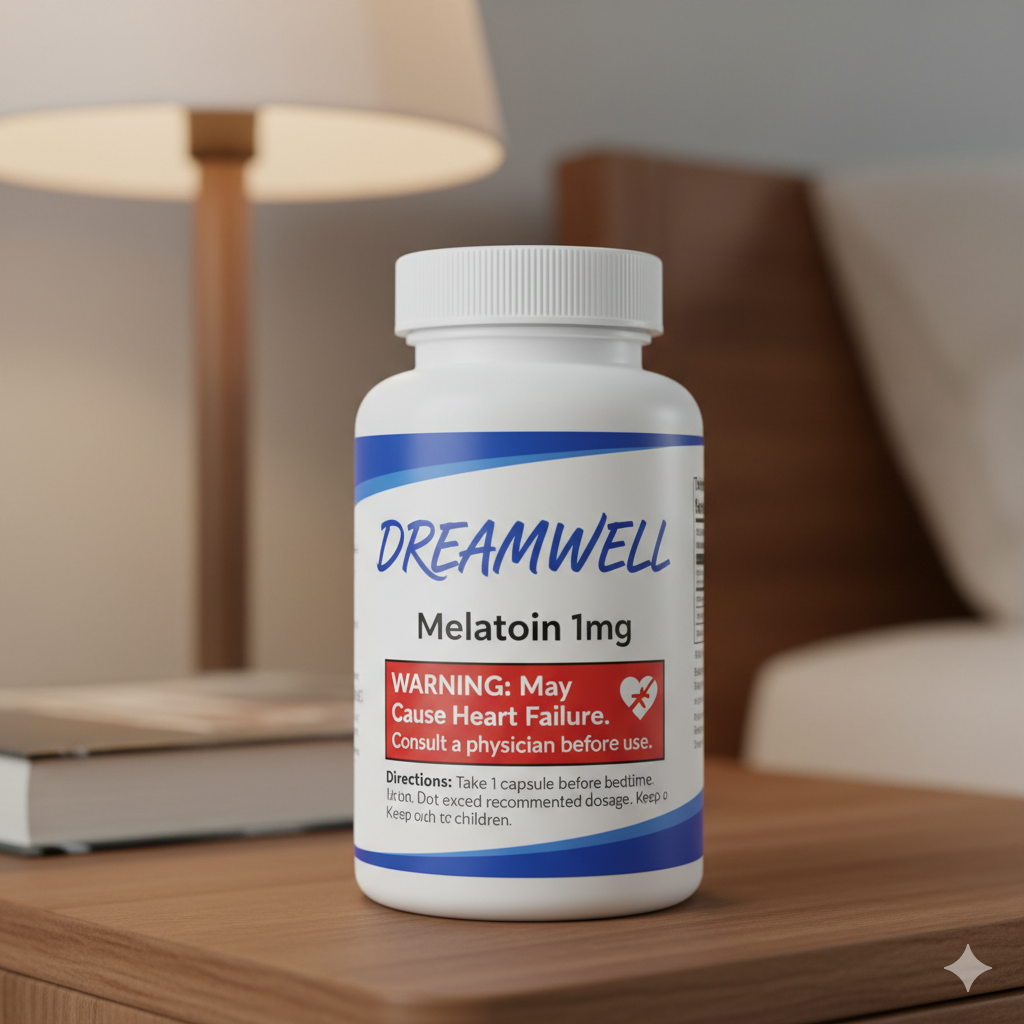
Long-Term Melatonin Use Linked to 90% Higher Heart Failure Risk
Arveity Setty, MD, FAASM, FAAP, DABOM at TeleSleepClinic.com
Hey folks, if you’re one of the millions relying on melatonin to catch those elusive Z’s, you’re not alone. That tiny pill or gummy promises to mimic your body’s natural “lights out” signal, and it’s everywhere—from drugstore shelves to your Amazon cart. But a fresh study presented just last week at the American Heart Association’s (AHA) big 2025 Scientific Sessions is raising some eyebrows. It suggests that popping melatonin regularly for months or years might up your odds of heart failure and other serious issues. Don’t hit the panic button yet—this is early news from an abstract (think: a teaser summary, not the full, scrubbed-by-experts paper). Let’s break it down in plain English, like we’re chatting over coffee, so you can decide if it’s time to rethink your bedtime routine.
The Big Picture: Why This Study Matters Right Now
Insomnia hits about one in three adults— that’s a ton of us staring at the ceiling at 2 a.m., stressed about work, kids, or just life. Melatonin feels like a safe bet: no prescription needed, cheap, and “natural.” But as sales skyrocket (over $1 billion in the U.S. last year alone), docs are wondering about the long haul. This study dives into that, pulling real-world data from electronic health records across the globe to spot patterns. Spoiler: The patterns aren’t super reassuring for heavy users.
The lead researcher, Eyong Nnadi from the University of Pittsburgh, and her team crunched numbers on a massive group to see if long-term melatonin use (at least a full year) ties into heart woes. Presented on November 3, 2025, it’s buzzing in medical circles but remember: This is an abstract shared at a conference. It hasn’t gone through the full peer-review grind yet, where other experts poke holes and refine it. So, it’s intriguing intel, not gospel.
How They Set This Up: Who Got In, Who Got Out
To keep things fair, the researchers used a huge database called TriNetX (think: a global library of patient records from doctors’ offices worldwide). They focused on adults 18 and older diagnosed with chronic insomnia.
Who was included?
- The “melatonin group”: Folks who got at least one prescription for melatonin and took it for 365 days or more (that’s a year of steady use).
- The “control group”: People with the same insomnia diagnosis but zero melatonin prescriptions.
They started with over 130,000 people total, then used a smart matching trick (called propensity-score matching) to pair up 65,414 melatonin users with an equal number of non-users. This balanced the scales on stuff like age, weight, diabetes, blood pressure meds, smoking history, and even how often they saw the doctor—making the groups apples-to-apples. Super thorough, right? It ensured differences in heart risks weren’t just because one group was older or sicker to start.
Who was excluded?
- Anyone with heart failure already on their record (no pre-existing issues here).
- People on other sleep meds like prescription sleeping pills (to isolate melatonin’s effects).
- Basically, they weeded out anyone who might muddy the waters, focusing on “clean” cases of new-to-melatonin insomniacs.
They tracked everyone for five years from their first insomnia diagnosis, watching for heart events like a hawk.
The Shocking Highlights: What the Numbers Say
Over those five years, the results painted a pretty stark picture. Here’s the gist in everyday terms—no PhD required:
- New heart failure diagnoses: 4.6% of melatonin users got hit with heart failure compared to just 2.7% in the non-users. In stats lingo, that’s an 89% higher risk (hazard ratio of 1.89)—or put simply, nearly double the chance. The absolute bump? About 1.9% more cases overall.
- Heart failure hospital stays: Oof—this jumped to 19% for users versus 6.6% for controls. That’s a whopping 3.4 times higher risk, meaning folks on long-term melatonin ended up in the ER or admitted way more often for heart pump problems.
- Overall death risk: The toughest pill—7.8% of users passed away from any cause, versus 4.3% in the control group. Again, about double the odds (hazard ratio 2.09).
They double-checked with a stricter cutoff (at least two prescriptions 90 days apart), and the heart failure risk still clocked in at 82% higher. These aren’t tiny sample sizes; we’re talking tens of thousands of real patients, so the signal’s strong. But here’s the key: This shows links, not “melatonin directly causes heart failure.” Insomnia itself stresses the heart, and maybe folks who need long-term help have deeper issues melatonin might mask.
The Fine Print: Why We’re Not Freaking Out (Yet)
Deep breath—this isn’t a “stop everything” alert. For starters, it’s observational data (spotting patterns in records, not a controlled experiment where half the group gets fake pills). Confounders could lurk: Maybe severe insomniacs (who grab melatonin) also skip exercise or eat poorly, amping heart risks independently. Plus, many folks buy OTC melatonin without docs knowing, so exposure might be undercounted in controls.
And yep, as an abstract, it’s not peer-reviewed. That means no full paper with every nitty-gritty scrutinized (yet). Experts like those quoted in The Washington Post are saying: “Interesting flag—time for big trials,” not “Toss your bottle!” The AHA newsroom echoes: No proven cause-and-effect, but worth watching.
Your Takeaway Toolkit: Smart Steps for Better Sleep and a Stronger Heart
So, what’s the move while we wait for more research? Here’s the no-BS advice from sleep pros and cardiologists weighing in:
- Short and sweet wins: Melatonin shines for occasional use—like jet lag or a rough week (1-2mg, 30-60 minutes before bed). But for chronic stuff? Limit to a few months max, and chat with your doc first, especially if you’ve got heart family history, high blood pressure, or you’re over 50.
- Ditch the guesswork: Those 5-10mg gummies? Often way more than your body needs (it makes just 0.3mg naturally). Stick to low doses from reputable brands—potency varies wildly.
- Heart-smart swaps: Build habits that fix the root, not just the symptom. Try cognitive behavioral therapy for insomnia (CBT-I)—there are many free apps available to use which can rewire your sleep brain better than pills. Wind down with no screens an hour before bed, sip chamomile, or hit a consistent 10 p.m. lights-out. Bonus: Exercise and stress-busters like yoga cut insomnia and heart risks.
Bottom line? This study’s a wake-up call to treat melatonin like a tool, not a crutch. Your heart’s too important for “maybe” risks. If sleep’s stealing your joy, loop in a pro—they can screen for sneaky culprits like sleep apnea (which tanks heart health too).
If you are struggling to fall asleep and stay asleep, we are here at telesleepclinic.com to address your issues.